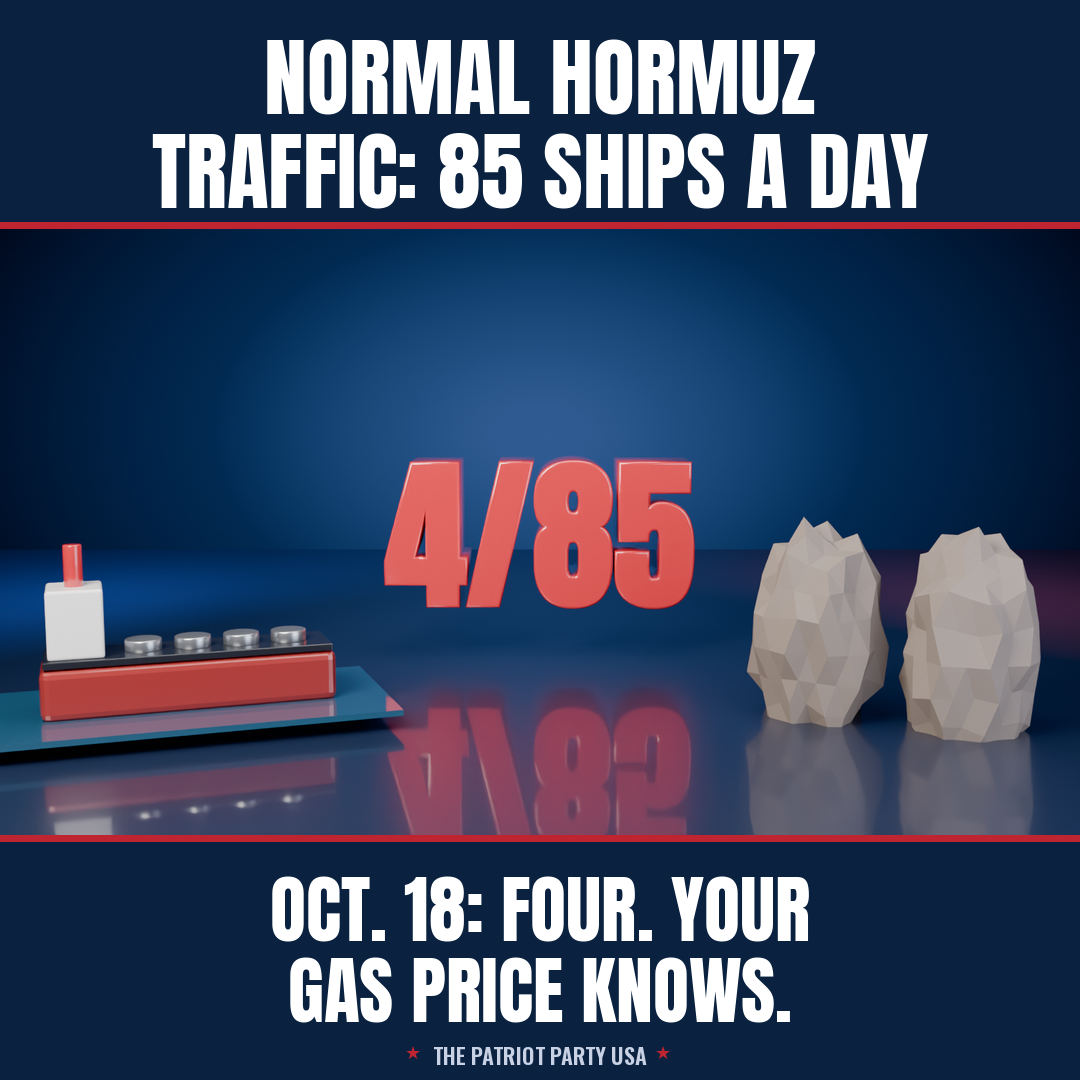
Hormuz Still Choked: 4 Transits on Oct. 18 vs. 85 a Day Before the War, as Brent Hovers Near $116
Saudi Arabia is moving 7 million barrels a day around the strait; U.S. forces have escorted 3,000-plus ships in six months.

Commercial traffic through the Strait of Hormuz remains a fraction of normal. IMF PortWatch recorded 4 transits on Oct. 18 against a pre-crisis baseline of 85 a day, according to the Straits Daily Brief. Other counts differ: the tanker association INTERTANKO cites more than 30 transits a day on a U.S.-backed route, a gap the brief attributes to differing definitions of a crossing. As of Oct. 26, 159 vessels were holding position in the strait and Gulf watch area.
U.S. Central Command’s Adm. Brad Cooper said Oct. 25 that more than 3,000 commercial vessels had transited with U.S. military support over the past six months, CBS News reported. Iran claimed Oct. 22 to have struck four ships on the U.S.-endorsed southern route; Trump called the claims lies meant to raise oil prices, and none were independently confirmed. Iranian state TV said traffic by “non-compliant” vessels had been halted.
The region is rerouting. Saudi Aramco said flows through its East-West pipeline, which bypasses Hormuz, rose from 2 million to 7 million barrels a day. The UAE reported an oil spill from a tanker hit on Oct. 9 that closed beaches at Umm Al Quwain.
Brent crude was near $116 and WTI near $102 on Oct. 26, after Brent topped $117 on Oct. 23, its highest since March.
Why it matters. One narrow strait still moves a large share of the world’s oil, and every American driver is paying for that vulnerability. The U.S. Navy keeping the sea lanes open is a reminder of why American strength at sea matters, and why American energy production at home matters even more.
The other side. Critics argue the U.S. blockade of Iranian ports is part of what keeps the strait closed; administration officials say Iran’s attacks, not the blockade, are the obstacle.
Open questions. Whether attacks on shipping continue at October’s pace, and how long Saudi pipeline capacity can cover the gap.
Facts above are attributed to the linked reporting. Statements in a source's own opinion section are labeled as commentary. We correct errors promptly.